
A consistent module structure is critical for adult online learners. Most online students are balancing work, family, and school, so they rely on clear, predictable organization to navigate your course efficiently. When modules follow a consistent structure, students spend less time searching for materials and more time engaging with the content (Ambrose et al., 2010).
Organizing your modules intentionally also supports learning. Clear structure reduces cognitive load and helps students understand how content, activities, and assessments connect (Mayer, 2009).
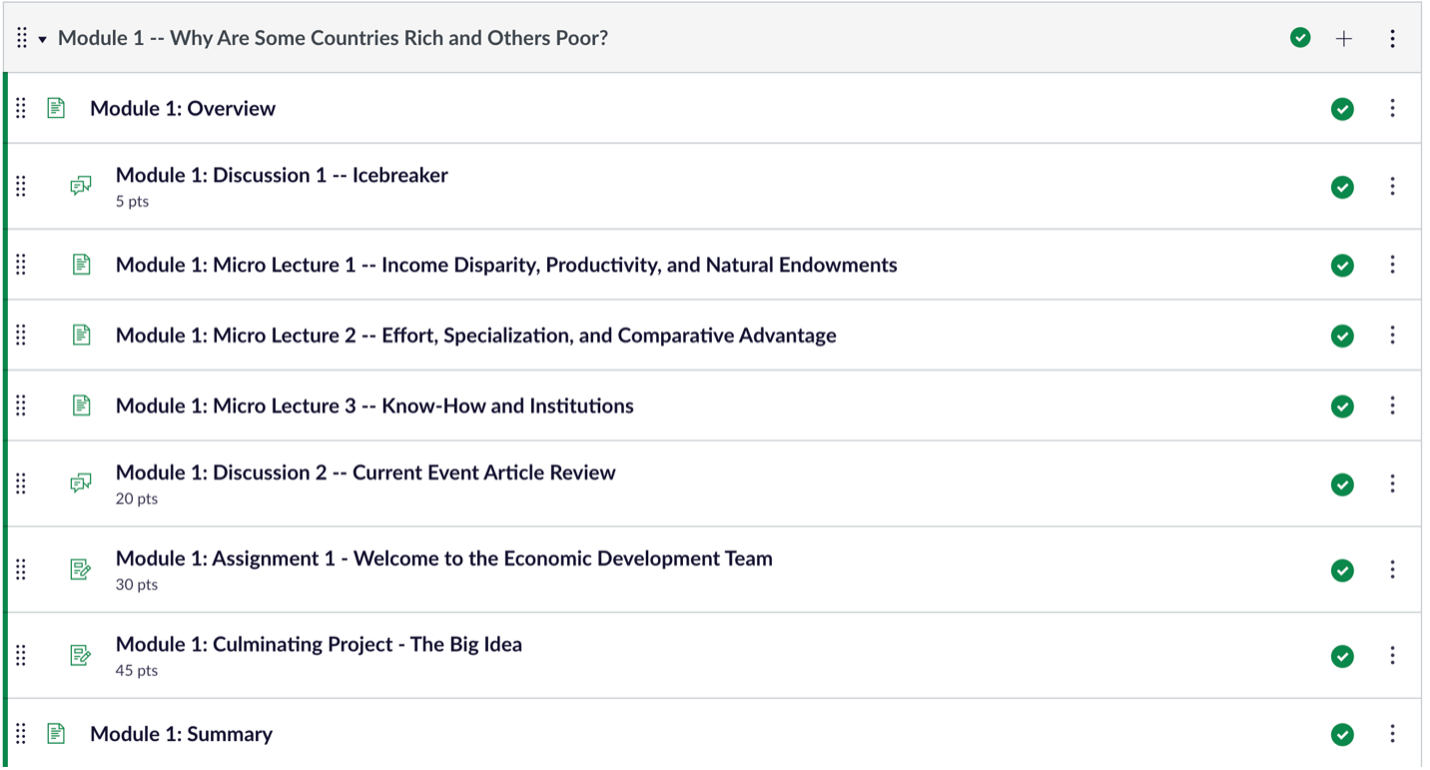
This example shows a consistent module structure that moves students from introduction and engagement through content, discussion, and assignments, culminating in a final project and summary that reinforces learning.
Once you choose a structure, use it consistently across modules. Here are some examples:
This approach works well for courses with a steady rhythm and fewer moving parts.
- Module overview
- Lesson content
- Discussion
- Assignment
- Summary
In this format, students quickly learn the flow and can move through the module without confusion. This is especially helpful in shorter courses or those with a consistent weekly pattern.
This structure works well when students need to engage with multiple topics before completing a larger assessment or assignment.
- Module overview
- Lesson – Topic 1
- Lesson – Topic 2
- Knowledge check
- Discussion
- Assignment
- Summary
Breaking content into smaller sections helps students stay focused. Adding a knowledge check before larger assessments also gives them a chance to confirm understanding before moving forward.
This approach is useful for more complex topics or skill-building courses.
- Module overview
- Lesson – Topic 1
- Knowledge check
- Lesson – Topic 2
- Knowledge check
- Discussion
- Group activity
- Assignment
- Summary
In this model, students build understanding step by step. Frequent checks and activities help reinforce learning and keep students engaged throughout the module.
Organizing your module is less about the exact format and more about clarity and consistency. When students know where to find materials and how to move through the course, they can focus on learning instead of navigation.
References
- Ambrose, S. A., Bridges, M. W., DiPietro, M., Lovett, M. C., & Norman, M. K. (2010). How learning works: Seven research-based principles for smart teaching. Jossey-Bass.
- Mayer, R. E. (2009). Multimedia learning (2nd ed.). Cambridge University Press.