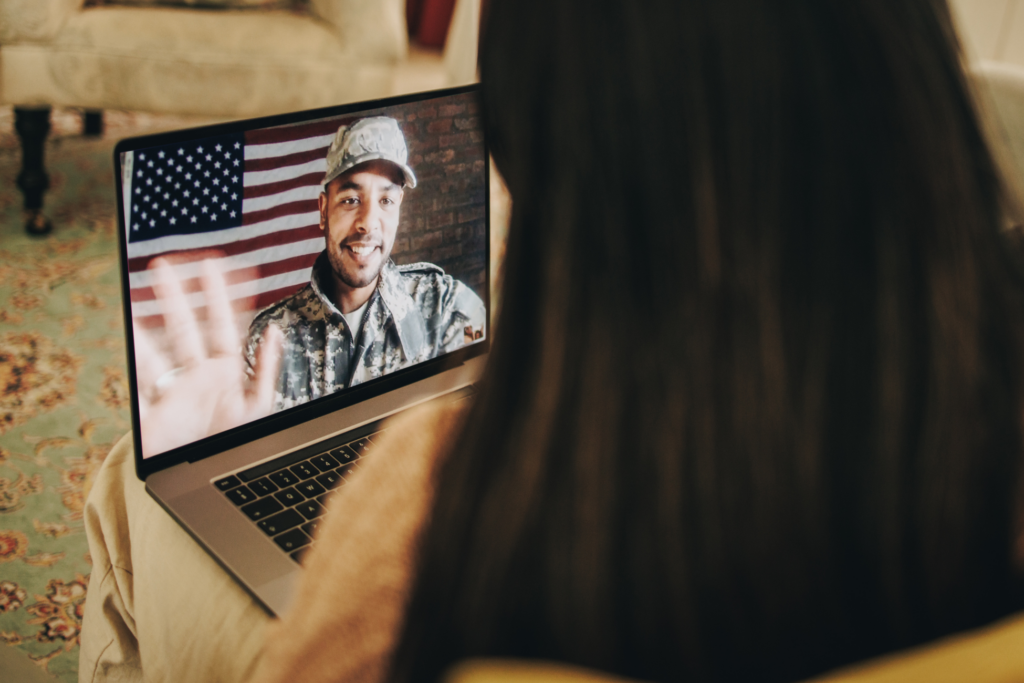
As of 2013, more than a million veterans have taken advantage of the Post-9/11 GI Bill to pursue their higher education degrees, and that number has steadily increased over the last eleven years. (Department of Veterans Affairs, n.d.). Like most student populations, veterans bring their own unique needs to the online classroom. However, despite veterans’ rising enrollment rates, almost half of higher education instructors said they would not participate in a seminar to learn more about the needs of the veteran student population (Gonzalez & Elliott, 2013).
The article provides an in-depth look at the unique needs and strengths of student veterans in the online higher education environment.
Veteran student profile
When discussing how to help veterans succeed in the online space, you should remember that no two soldiers, sailors, airmen, or marines are identical. Some may have experienced combat, while others served in the reserves here at home. Most are likely former enlisted personnel, meaning that they never served as officers, and have limited experience in higher education (John Kamin, personal communication, October 18, 2017).
In contrast, former officers are likely adult learners who have families, children, and a defined career path they are working toward. Regardless of these differences in age and experience, the following are some common characteristics you should be aware of when a student veteran enrolls in your course.
Many veterans choose to delay or interrupt college in favor of military service, so they often begin their degrees at 25 years old or older, or they may be picking up courses again after a time away from school.
Because of veterans’ age, principles of andragogy (teaching adult learners) apply. For example, student veterans are more likely to be self-directed, have a reservoir of experiences that they can leverage to enrich their learning, possess intrinsic motivation, and are focused on immediately applying what they’re learning to their lives and careers. Military experience in particular has likely instilled in student veterans a high sense of discipline, purpose, and work ethic, and they bring a rich perspective to education due to their global experience, leadership skills, discipline, focus, and ability to work under pressure (Conference on College Composition and Communication [CCCC], 2015; Maryland Veterans Resilience Initiative [MVRI], 2014).
However, being more experienced can also have its drawbacks. For example, student veterans may become frustrated if they see their cohorts speaking or acting in a way that they find naïve, disrespectful, or lazy because such behaviors are not acceptable in regimented military life (Kreuter, 2012). You may need to be prepared to help veterans understand that some students have different academic standards or work ethics than they do, particularly if they do group work with nonveteran students (MVRI, 2014).
Because of some of the demographic differences discussed in the previous section, veterans may have trouble adjusting to the life of a college student after serving in the military (St. Louis Post-Dispatch, n.d.). Military service typically involves a high sense of camaraderie, structure, and purpose that civilian life doesn’t always afford, and veterans can sometimes struggle to adjust (MVRI, 2014). Although some of these needs are beyond the scope of an online instructor or even an institution as a whole, you should be aware that veterans may be especially impacted by the typical struggles with isolation with which all online students must contend.
A 2011 study by Rudd, Goulding, and Bryan found that 24 percent of student veterans surveyed suffered from severe depression, 35 percent from severe anxiety, and 36 percent from symptoms of post-traumatic stress disorder, and 46 percent from suicidal thoughts (as cited in Bart, 2012). In addition, even if your student isn’t suffering from a physical or mental trauma, he or she may have friends who have been injured or even killed (MVRI, 2014).
Student veterans may never disclose their mental, physical, or emotional struggles to you. In fact, some of their struggles may not yet be diagnosed (MVRI, 2014). However, as you normally would, make sure to include a note in the syllabus telling students to contact you and your institution’s disability services office if they think they may need to make special accommodations to successfully complete course materials.
Supporting veterans in your classroom
Understanding veterans’ backgrounds can help instructors understand and sympathize with what may be going on behind the scenes with their student veterans. However, you can do more than merely understanding this demographic. The following strategies give you some proactive techniques you can use to help veterans be more engaged in your class.
At the start of a course, instructors can create activities or surveys that invite veterans to identify themselves, helping the instructor understand their backgrounds early on.
Referring students to campus veteran services, tutoring, and disability offices can provide essential support for veterans navigating academic challenges.
Instructors should tread carefully in discussions about military service, allowing veterans to share experiences voluntarily while avoiding invasive or inappropriate questions.
Detailed rubrics, explicit instructions, and clear expectations can help veterans, accustomed to military order, feel more comfortable and confident in meeting course requirements.
Veterans often excel in group settings due to their training in teamwork and leadership. Structuring group projects with clear objectives and defined roles can harness these strengths effectively.
When discussing political or military issues, maintaining objectivity and respect is crucial, as veterans may have strong personal connections to these topics.
Invite student veterans to share their experiences, but don’t insist on it
Veteran students may bring a rich depth of experiences to the classroom because of their work and travel during their time in the military. That being said, you should tread lightly when it comes to inviting these students to share their experiences because they may be sensitive discussing it with you and their classmates. The following are tips on how best to approach this issue (CCCC, 2015; Kreuter, 2012; MVRI, 2014):
- Don’t force veterans to talk about their time in the military or put them on the spot with questions about it, even if the course material closely relates to their experiences. If you do think the class would benefit academically from hearing about a veteran’s experience, ask him or her in private if he or she is comfortable with sharing.
- If conflicts arise or if student veterans begin to dominate a conversation about military matters, set boundaries for appropriate conversation with students in private.
- Avoid saying you understand or can relate if you haven’t served in the military or shared the same kinds of experiences.
- One of the most inappropriate questions you can ask a veteran is if he or she has ever killed anyone. If you see other students asking such questions, intervene immediately to tell them that is inappropriate.
“Neither a wise nor a brave man lies down on the tracks of history to wait for the train of the future to run over him.”
Dwight D. Eisenhower
By enrolling in online courses, your student veterans are taking hold of their future instead of waiting for it to happen to them. Similarly, a good instructor will be proactive in understanding and meeting these students where they are, and will implement pedagogical techniques to help them succeed in the online classroom. In that way, instructors will act as a “force multiplier” to help veterans’ dreams become reality.
References
- Bart, M. (2012, October 25). Helping student veterans succeed in the classroom. Retrieved from https://www.facultyfocus.com/articles/faculty-development/helping-student-veterans-succeed-in-the-classroom/
- Conference on College Composition and Communication. (2015, March). Student veterans in the college composition classroom: Realizing their strengths and assessing their needs. Retrieved from http://cccc.ncte.org/cccc/resources/positions/student-veterans
- Department of Veterans Affairs. (n.d.). Who are today’s student veterans? Retrieved from https://www.mentalhealth.va.gov/student-veteran/learn-about-student-veterans.asp
- Gonzalez, C., & Elliott, M. (2013). What faculty say about student veterans: A survey of UNR and TMCC instructors. Retrieved from https://files.eric.ed.gov/fulltext/EJ1107471.pdf
- Kreuter, N. (2012, November 12). Veterans in the classroom. Retrieved from https://www.insidehighered.com/advice/2012/11/12/essay-teaching-veterans
- Maryland Veterans Resilience Initiative. (2014, Spring). Teaching student veterans. Retrieved from https://veterans.maryland.gov/about-us/commissions/maryland-college-collaboration-student-veterans-commission
- Sportsman, M. A., & Thomas, L. (2015, Winter). Coming home to school: Challenges and strategies for effective teaching with military veterans. InSight: A Journal of Scholarly Teaching, 10, 43–55. Retrieved from https://eric.ed.gov/?id=EJ1074051
- St. Louis Post-Dispatch. (n.d.). Veterans returning to college face unique challenges. Retrieved from https://www.military.com/veteran-jobs/career-advice/military-transition/veterans-in-college-face-challenges.html