
When you write course- or module-level objectives or outcomes, use the acronym SMART—Specific, Measurable, Attainable, Relevant, and Time-bound—to assist you as you develop.
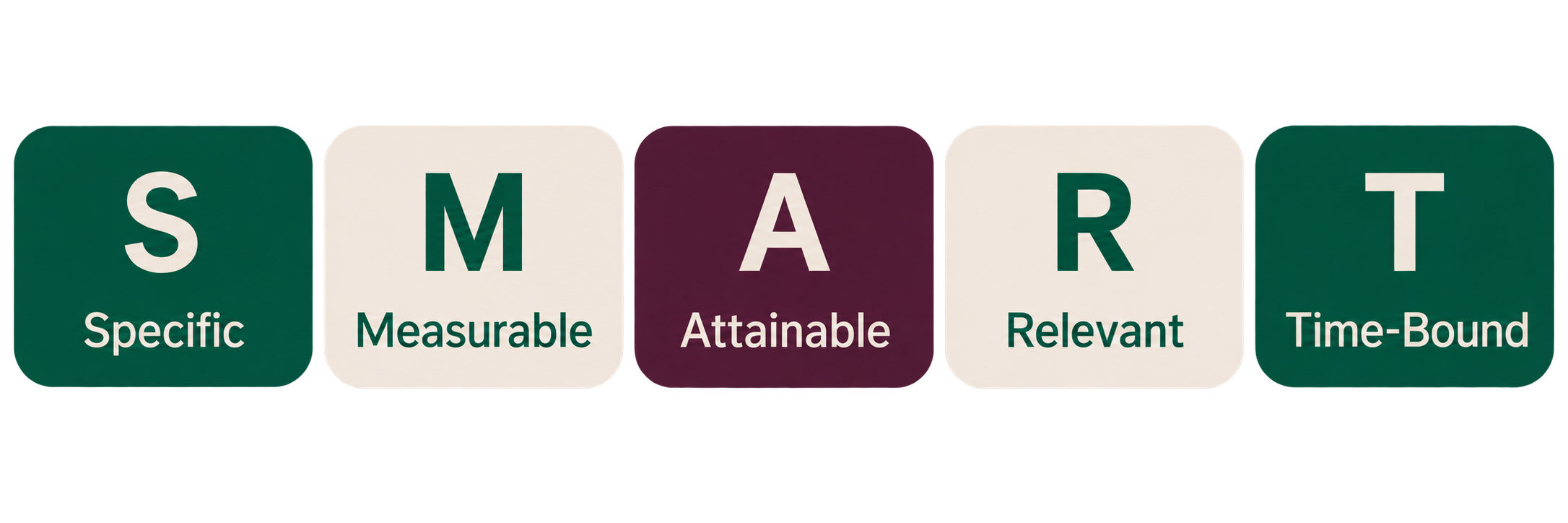
Each course and module objective should be…
- Specific: Specific to your course and the goals of the course. Avoid being vague and subjective.
- Measurable: Contain criteria that helps an instructor measure a student’s progress toward the completion of the goal.
- Attainable: Realistic for the students within a given timeframe and for the level of the course. Objectives should reflect higher-order thinking skills when and where appropriate.
- Relevant: Explicitly linked to the goals and theme of the course and program. If possible, craft objectives that are workforce relevant for students.
- Time-bound: Tied to a specific deadline that fits within the timeframe of the course.
Example
In this example of a SMART objective, the instructor has crafted an objective that utilizes the five different components.

Here, the objective is “specific” as it addresses only one desired outcome, the ability to construct an annotated bibliography in APA format. The formatting listed here adds specificity to the objective in order to clear confusion and subjectivity.
The objective is also measurable because it is easily quantifiable through criteria: “at least five identified resources.” The objective is also realistic and attainable for students. This objective asks students to “construct” something, a measurable verb found in Bloom’s Taxonomy which is suitable to the level of the course. The objective is also relevant to the professional and personal goals of the course developer and program. And finally, the objective is time-bound: “by the conclusion of the course.” The outcome as written has a clear timeframe for completion.